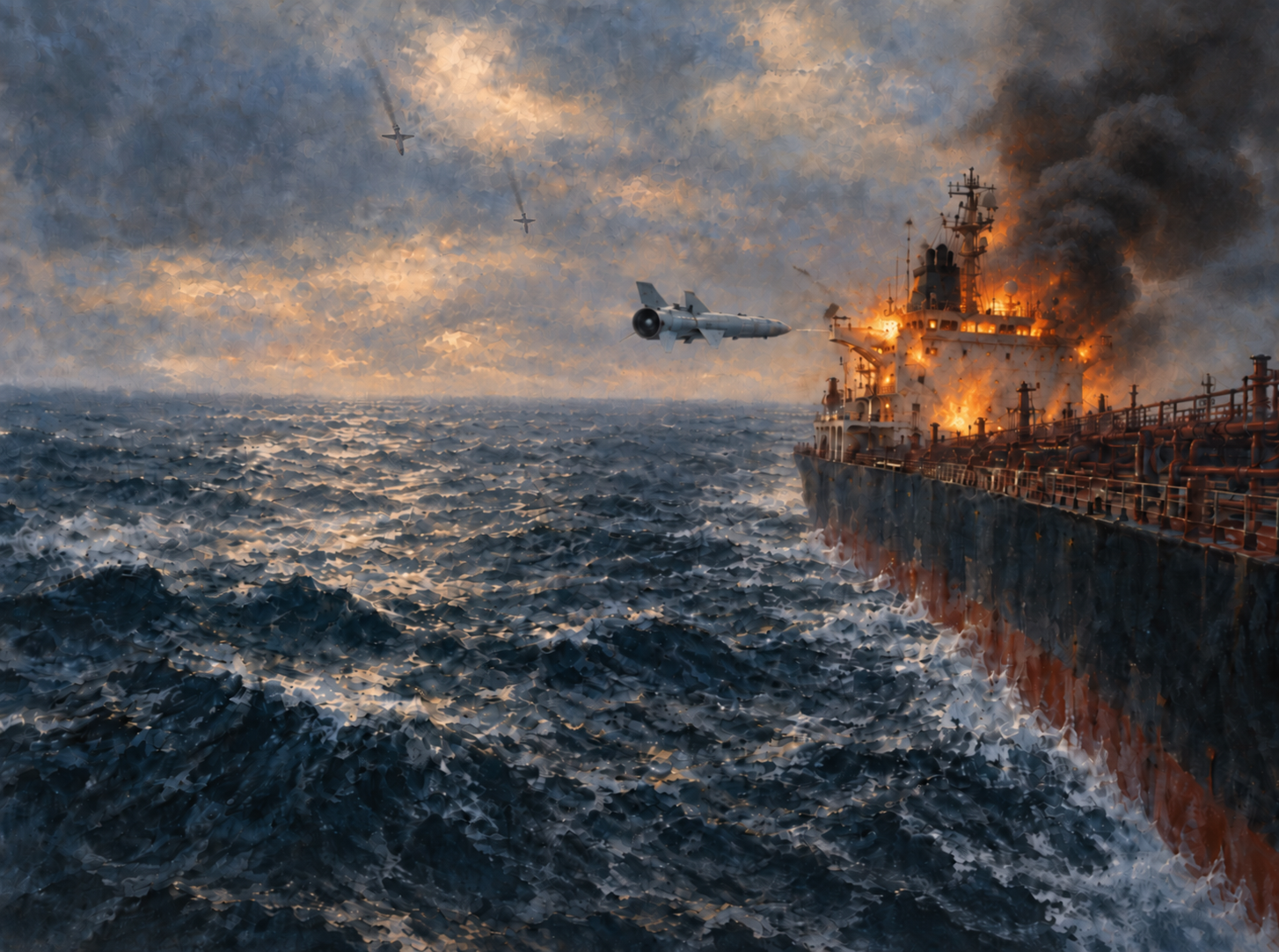
On 14 September 2026, an Iranian anti-ship cruise missile struck a vessel carrying United States Marines in the Strait of Hormuz. For thirteen days, the Pentagon said nothing — until NBC News, citing three American officials, broke the story on September 27. By then, the Defense Casualty Analysis System had already been quietly updated with thirty-seven new entries: twenty-nine sailors and eight Marines, added to the rolls without explanation, as though admitting the wounded to a database could substitute for admitting the truth to the public.
Such is the architecture of modern American military secrecy: not the suppression of information per se, but the deliberate, bureaucratic erosion of accountability, achieved through silence, deflection, and the convenient bureaucratic firewall between the Pentagon and its subordinate combatant command. When asked about the NBC report, DoD declined to comment.
The Pentagon referred questions to a circumlocution of deniability.
To understand the significance of what happened that day, one must first understand the vessel. It was not a Navy warship. It was not a Zodiac inflatable, nor a rubber raiding craft of the type Marines employ for amphibious assault. It was, by every available account, a commercially operated, US-contracted ship — a vessel whose name, flag, and class remain officially undisclosed thirteen days after the fact. Fox News correspondent Trey Yingst first reported it as a “US-contracted” vessel. NBC’s sources described it only as a “maritime vessel.” Middle Eastern outlets called it a commercial ship. Private maritime security firms independently identified a “Western-operated vessel” hit in the same region on the same day. The wounded were evacuated to a clinic in Bahrain, though this too remains unconfirmed. What emerges from these overlapping accounts is a picture of a Marine battalion landing team embarked aboard a commercial vessel, functioning as an escort or protection element for shipping transiting the strait — not as a raiding force in their own small craft, but as passengers on someone else’s ship, under someone else’s flag, operating under rules of engagement that have never been made public.
Since May 2026, the United States military has escorted approximately 1,300 commercial vessels through the Strait of Hormuz. The number is presented as evidence of competence. It is, in fact, evidence of the opposite – of a mission that has become so routine, so habitual, that the line between escort and vulnerability has dissolved entirely. Placing a Marine battalion landing team aboard a commercial vessel in a chokepoint contested by one of the most capable anti-ship missile forces in the region is not sound tactics.
The weapon that proved this was a Qadir anti-ship cruise missile — an Iranian modernization of the Noor, itself derived from the Chinese C-802. It is not a sophisticated weapon by contemporary standards. It is subsonic, flying at approximately 0.9 Mach, sea-skimming at twenty to thirty meters and dropping to three to five meters in the terminal phase. Its 165-kilogram semi-armour-piercing warhead can disable vessels up to 3,000 tons displacement. It is, in other words, exactly the kind of weapon any competent threat assessment should have anticipated in the Strait of Hormuz. The attack was further supported by four Iranian drones, suggesting not a lone strike but a coordinated engagement — one missile found its mark.
Eight Marines were injured: seven enlisted and one officer. The injuries were smoke inhalation and concussion symptoms – headaches, possible traumatic brain injury. None were categorized as serious. All returned to duty shortly after the attack. The DCAS entry appeared ten days later. The casual tone of this accounting – no one seriously hurt, back to work, file the paperwork – conceals what nearly happened. A Qadir missile striking a commercial vessel carrying Marines could have produced catastrophic loss of life. That it did is not a testament to American preparation. It is a matter of where the missile was struck and how the fire was propagated. Luck is not a doctrine.
The broader picture compounds the indictment. Total American military casualties in the Iran conflict reached 861 as of 23 September. The conflict began in late February 2026 under the name Operation Epic Fury, which ended on May 5. Since July 7, casualties have been tracked under a separate “Overseas Operations” category — a bureaucratic relabelling that conveniently distances the current administration from the body count of its predecessor’s escalation. Thirty-seven wounded added to the database without explanation. Eight Marines struck aboard a ship the Pentagon will not name, hit by a missile it will not discuss.
This is not a scandal in the conventional sense. There was no cover-up of casualties, no falsified reports, no direct lie. What there was – and what there is – is something more corrosive: a military establishment that has grown so confident in the ritual of its own operations that it cannot conceive of a routine patrol turning lethal, and when it does, responds not with transparency but with institutional reflex, the reflex to minimize, to defer, to refer, and ultimately to say nothing at all.
The ship’s name remains classified by omission. The missile was subsonic and predictable. The strait is not safe. It was never safe. And the confidence that said otherwise was the most dangerous weapon in the theater.