
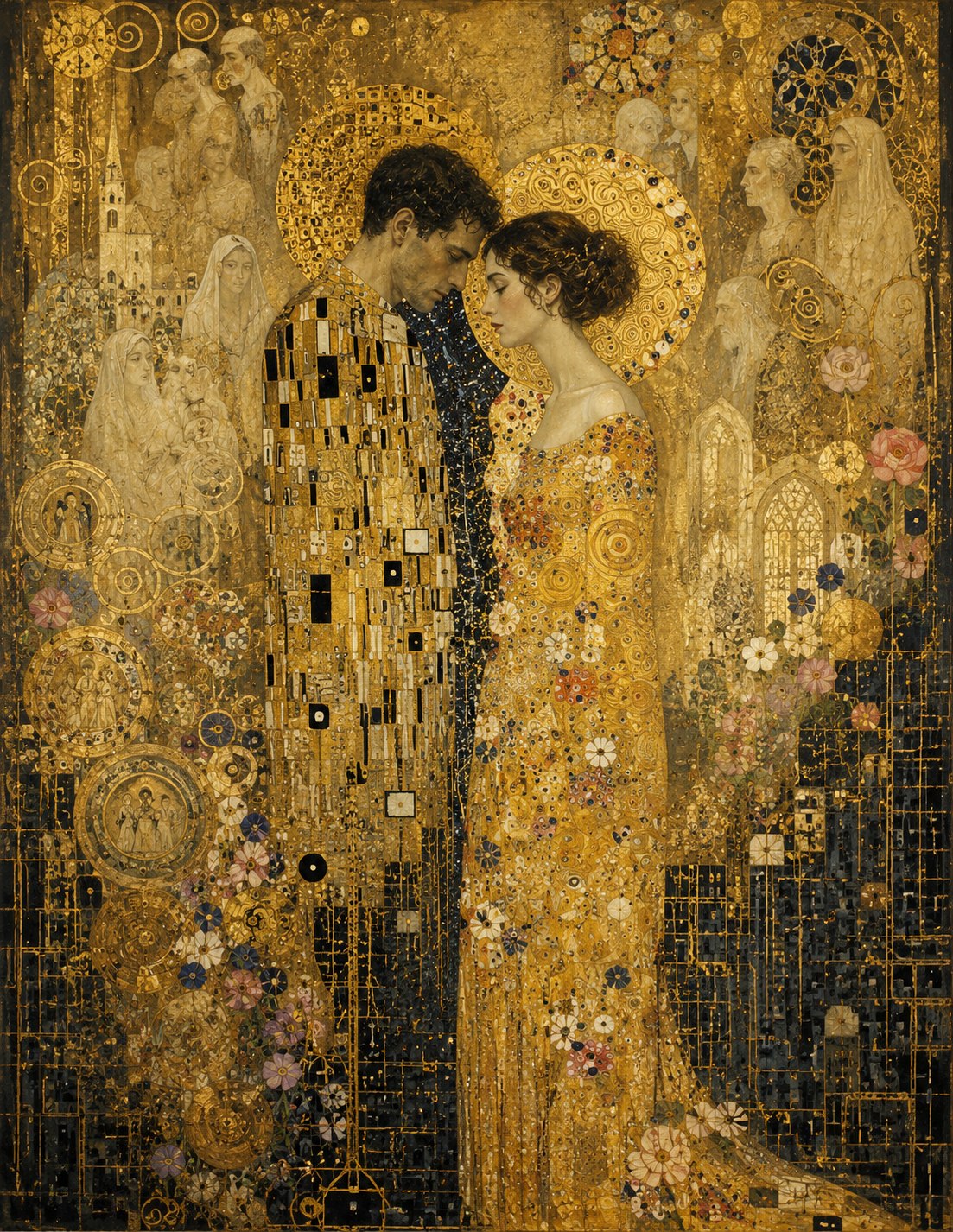
Puritans, Pioneers, and Dating Apps…
Émile Durkheim, the great French sociologist, wrote at the turn of the twentieth century about a profound transformation in Western social life. He observed that as traditional communities — the extended family, the church, the village, the guild — lost their hold on individuals, the individual was increasingly left alone to bear burdens that had once been shared. Nowhere was this more visible than in marriage. The couple, once embedded in a web of kinship, religious ritual, and community obligation, was now expected to satisfy emotional, spiritual, social, and psychological needs that had formerly been distributed across an entire social network. When the couple inevitably failed to meet these impossible expectations, both partners felt betrayed. The result was not merely divorce but a deeper, more existential sense of isolation and failure.
This Durkheimian insight is essential for understanding the American predicament. But to grasp its full force, we must trace the connection between Durkheim’s observations and the specifically Protestant inheritance that shaped American culture. The Protestant Reformation did not merely change theology. It transformed the social structure of intimacy, marriage, and community in ways that created the very conditions Durkheim described.
I. Durkheim’s Diagnosis: The Cult of the Individual and the Overburdened Couple
A. The Shift from Communal to Individual Society
Durkheim argued that pre-modern societies were characterized by mechanical solidarity: individuals were bound together by shared beliefs, shared rituals, and a strong collective conscience. The individual existed within a dense network of relationships — family, clan, village, church, guild — each of which provided meaning, support, and identity.
Modern societies, by contrast, were characterized by organic solidarity: individuals were differentiated, specialized, and interdependent through the division of labor. But this interdependence was functional, not emotional. The individual was more autonomous, but also more isolated. The old communal bonds had weakened, and nothing had fully replaced them.
This was the cult of the individual: the modern belief that the individual is the fundamental unit of society, that the individual’s rights, feelings, and self-realization are paramount. This was liberating in many ways, but it also placed an enormous burden on the individual to create meaning and connection on their own.
B. The Overburdening of Marriage
In traditional society, marriage was not primarily about emotional fulfillment. It was an economic arrangement, a political alliance, a religious duty, and a means of perpetuating the family line. Emotional intimacy, where it existed, was a bonus, not an expectation.
The extended family provided economic support. The church provided spiritual guidance and ritual. The village provided social connection. The guild provided professional identity. The individual was surrounded by a dense network of relationships that satisfied a wide range of needs.
In modern society, this network collapsed. The extended family dispersed. The church lost authority. The village disappeared into the anonymous city. The guild dissolved into the impersonal market. The individual was left alone, and the only remaining institution that promised intimacy was marriage.
The result, Durkheim argued, was that marriage was expected to satisfy needs it was never designed to satisfy. The couple was supposed to be each other’s best friend, lover, therapist, spiritual companion, co-parent, economic partner, and sole source of emotional support. This was an impossible burden. When the couple failed — as they inevitably did — both partners felt betrayed. The result was not just divorce but a deeper sense of isolation, failure, and despair.
C. The Paradox of Modern Intimacy
Durkheim saw a profound paradox in modern marriage. The very individualism that had freed people from the constraints of traditional marriage had also made marriage more fragile. The individual entered marriage expecting it to fulfill their deepest needs for connection, meaning, and validation. But the individual also retained the modern suspicion of commitment, the fear of losing autonomy, the belief that they could always find someone better.
This created a structural contradiction. The modern individual wanted marriage to be everything — but also wanted to remain free. They wanted intimacy — but also wanted independence. They wanted connection — but also wanted escape. The result was a series of fragile unions, each entered with impossible expectations, each dissolved with bitter disappointment.
II. The Protestant Roots of the Durkheimian Crisis
A. The Protestant Destruction of Mediated Community
Durkheim’s analysis is sociological, but the historical roots of the crisis he described lie in the Protestant Reformation. Protestantism, as we have seen, systematically dismantled the network of mediators that had once surrounded the individual.
- The saints were removed as intercessors, leaving the believer alone before God.
- The priesthood was abolished as a distinct spiritual class, leaving the believer to interpret Scripture on their own.
- The sacraments were reduced or eliminated, stripping away the rituals that had once marked the passages of life.
- Purgatory was rejected, removing the connection between the living and the dead.
- Monasticism was abolished, eliminating the option of spiritual withdrawal from the world.
The result was a radical simplification of the social world. The medieval Catholic had lived in a rich, complex network of relationships: with the saints in heaven, with the souls in purgatory, with the priest in the confessional, with the community in the mass, with the dead through prayer. The Protestant believer was left alone with God, and God was invisible, silent, and often felt as absent.
This theological isolation had profound social consequences. The community that had once surrounded the individual — the church, the parish, the guild, the extended family — lost its sacred character. It became merely functional, merely human, merely optional. The individual was free, but also alone.
B. The Protestant Transformation of Marriage
Protestantism also transformed the theology of marriage. In the Catholic tradition, marriage was a sacrament: a means of grace, a participation in the divine life, embedded in a larger web of family, church, and community. The couple was not alone; they were surrounded by saints, ancestors, godparents, and the living community of the parish. Their union was blessed and sustained by the church.
Protestantism, especially in its Calvinist form, rejected the sacramental status of marriage. Marriage was a covenant, a contract between two individuals before God. It was holy, but it was not a means of grace. The couple stood alone before God, with no mediators, no intercessors, no community of saints.
This had two consequences. First, it elevated marriage as the primary site of emotional and spiritual intimacy. Since the monasteries were abolished and the priesthood was dissolved, marriage became the only legitimate context for deep human connection. The Puritans, in fact, celebrated marital love with an intensity that would have astonished their Catholic contemporaries.
But second, it isolated marriage from the larger community. The couple was no longer embedded in a web of relationships that could support, sustain, and share the burden. They were alone. And this isolation created the conditions for the crisis Durkheim described.
C. The Protestant Work Ethic and the Neglect of Relationship
The Protestant work ethic also contributed to the overburdening of marriage. The believer was called to work diligently, to treat time as a sacred trust, to avoid idleness. Work was a form of divine service. This ethic, secularized over time, produced a culture in which work was prioritized over relationship.
The American man was taught that his worth was measured by his productivity. The American woman was taught that her worth was measured by her independence and career success. Both were taught that relationship was secondary, that love was a distraction from the real business of life.
The result was a culture of delayed marriage, declining fertility, and relational neglect. Men and women postponed commitment because they were focused on their careers. They postponed children because they were not ready. They postponed vulnerability because they were too busy. By the time they finally turned to marriage, they brought with them decades of emotional isolation and unrealistic expectations.
III. The Durkheimian Crisis in American Marriage
A. The Impossible Expectations
The American couple enters marriage expecting it to satisfy needs that no relationship can satisfy. They expect:
- Emotional fulfillment: the spouse must be the primary source of happiness, validation, and meaning.
- Psychological support: the spouse must be the therapist, the confidant, the emotional anchor.
- Spiritual companionship: the spouse must share and support one’s spiritual journey, even though there is no shared religious framework.
- Social connection: the spouse must be the best friend, the primary social companion, the replacement for the community that no longer exists.
- Economic partnership: the spouse must contribute equally to the household, even as the economy makes this increasingly difficult.
- Sexual satisfaction: the spouse must be the sole outlet for sexual desire, even as the culture is saturated with sexual imagery and alternatives.
- Co-parenting: the spouse must share the burdens of child-rearing, even as extended family support has evaporated.
This is an impossible burden. No human being can satisfy all these needs simultaneously. The result is inevitable disappointment, resentment, and the feeling of betrayal that Durkheim described.
B. The Betrayal Narrative
When the marriage fails — as it inevitably does in some measure — both partners feel betrayed. The man feels betrayed because his wife is not the unconditional source of support he expected. The woman feels betrayed because her husband is not the emotionally available partner she hoped for. Both feel that the other has broken a promise, even though the promise was never realistic.
This betrayal narrative is reinforced by the culture. The media tells us that we deserve happiness, that we should not settle, that we should leave if our needs are not being met. The result is a high divorce rate and a deep sense of personal failure. The individual who divorces feels not just that the marriage failed, but that they failed. The Protestant anxiety about worthiness returns in secular form.
C. The Isolation After Failure
After the divorce or breakup, the individual is more isolated than before. The extended family that might have once provided support is distant or absent. The church that might have once provided community is empty. The friends who might have once provided comfort are busy with their own marriages and careers. The individual is alone, with nothing but the ruins of an impossible expectation.
This is the deepest irony of the Durkheimian crisis. The very individualism that led the couple to expect so much from marriage also leaves them with nothing when the marriage fails. They cannot turn to the community, because the community has dissolved. They cannot turn to the church, because the church has lost authority. They cannot turn to ritual, because ritual has been stripped away. They are alone, and their loneliness is compounded by the shame of failure.
IV. The Gendered Dimension of the Crisis
A. The Protestant Masculine Ideal
The Protestant ethic created a specifically masculine ideal of self-sufficiency and emotional stoicism. The man was supposed to stand alone, to provide, to protect, to never show weakness. Vulnerability was dangerous, because it raised the terrifying possibility that one was not among the elect.
This ideal has secularized into the modern American ideal of the emotionally unavailable man. The man who cannot cry, who cannot ask for help, who cannot express need, who treats relationship as a distraction from work — this man is the product of centuries of Protestant conditioning. He enters marriage expecting his wife to provide the emotional connection he cannot provide for himself, but he does not know how to receive it.
The result is a profound asymmetry. The woman is expected to do the emotional labor for both partners, to be the sole source of intimacy and connection in the relationship. This is exhausting and ultimately unsustainable. The woman eventually gives up, and the man is left in the isolation he feared but could not name.
B. The Protestant Feminine Ideal
The Protestant ethic also created a specifically feminine ideal: the woman as keeper of the home, nurturer of relationships, emotional center of the family. This ideal was domesticating but also elevating. The woman was the moral anchor of the household, the one who maintained the covenant of intimacy that the man could not maintain alone.
But this ideal placed an enormous burden on women. The woman was expected to be the emotional support for her husband, the moral educator of her children, the spiritual guardian of the home — all while having no independent source of identity or fulfillment. The result was a quiet desperation, a sense of being trapped in a role that demanded everything and gave nothing.
This has secularized into the modern American crisis of feminine exhaustion. The woman is still expected to do the emotional labor, but she is now also expected to have a career, to be independent, to “have it all.” The result is burnout, resentment, and the growing sense that marriage is a bad bargain.
C. The Mutual Resentment
The result of these gendered burdens is mutual resentment. The man resents the woman for demanding emotional intimacy he does not know how to provide. The woman resents the man for refusing to do the emotional labor she is expected to perform. Both feel that the other is failing them, and both are right.
This mutual resentment is the direct product of the Durkheimian crisis. The couple was never meant to be each other’s sole source of emotional support. The burden is too great. The expectations are too high. The community that might have shared the burden has dissolved. The rituals that might have structured the relationship have been stripped away. The result is two isolated individuals, alone together, each blaming the other for a failure that is structural, not personal.
V. The Philosophical Implications
A. The Irony of Individualism
The deepest irony of the Durkheimian crisis is that the cult of the individual has produced not freedom but isolation. The individual who was freed from the constraints of traditional community now finds themselves alone, burdened with needs they cannot satisfy, longing for connection they cannot create.
The Protestant believer who rejected the mediation of the church now finds themselves longing for a mediator. The American individual who rejected the constraints of extended family now finds themselves longing for a family that no longer exists. The couple who expected marriage to be everything now finds themselves with nothing.
This is the tragic logic of the Protestant inheritance. The Reformation sought to free the individual from the tyranny of the church. It succeeded. But it also destroyed the very structures that had once made intimacy possible. The result is a culture of isolated individuals, each standing alone before an absent God, each longing for a connection they have been taught to fear.
B. The Need for New Mediation
Durkheim did not believe that the solution to the crisis was to return to the old order. The cult of the individual was irreversible; the old communal bonds could not be restored. But he did believe that new forms of mediation were necessary — new institutions, new rituals, new communities that could support the individual without crushing them.
This is the challenge facing American culture. The Protestant inheritance has stripped away the old mediators — the saints, the sacraments, the priesthood, the extended family, the parish community. But it has not replaced them. The result is a culture of isolation, anxiety, and failed intimacy.
The solution, if there is one, will require building new forms of community that can share the burden that marriage alone cannot bear. It will require new rituals that can structure the passages of life. It will require new mediators — therapists, counselors, mentors, friends — who can stand between the individual and the abyss.
But this will require confronting the Protestant suspicion of mediation. It will require admitting that the individual cannot stand alone, that the self is not enough, that human beings need each other. This is a difficult admission for a culture built on the myth of the rugged individual. But without it, the loneliness will deepen, the marriages will fail, and the crisis between men and women will only worsen.
VI. Conclusion: The Impossible Burden and the Need for Grace
Durkheim’s insight into the impossible burden placed on modern marriage is, at its deepest level, a theological insight. The couple was never meant to be each other’s sole source of meaning, validation, and emotional support. This burden is too great for any human relationship to bear.
The Catholic tradition understood this. It surrounded the couple with saints, sacraments, and a community of the living and the dead. It provided rituals to mark the passages of life. It offered confession and absolution for the inevitable failures. It did not ask the couple to be everything to each other; it asked them only to be faithful to each other within a larger web of grace.
The Protestant tradition stripped this away. It left the couple alone before God, with no mediators, no intercessors, no community. It demanded that the couple be the sole site of emotional and spiritual intimacy. And then it secularized into a culture that retained the demand but lost the grace.
The result is the crisis Durkheim described: the couple crushed under the weight of expectations they cannot meet, the partners feeling betrayed by each other’s inevitable failures, the individuals left more isolated than before.
This is the Protestant legacy. The city upon a hill has become a nation of lonely souls, each standing alone before an absent God, each longing for a connection they have been taught to fear, each bearing an impossible burden they cannot escape.
The way forward, if there is one, will require recovering what Protestantism stripped away: a theology of grace that can forgive failure, a community that can share the burden, and a vision of intimacy that does not ask one human being to be everything to another. Until then, the iron cage will remain, and the couples within it will continue to fail under the weight of an expectation that was never meant to be theirs alone.