
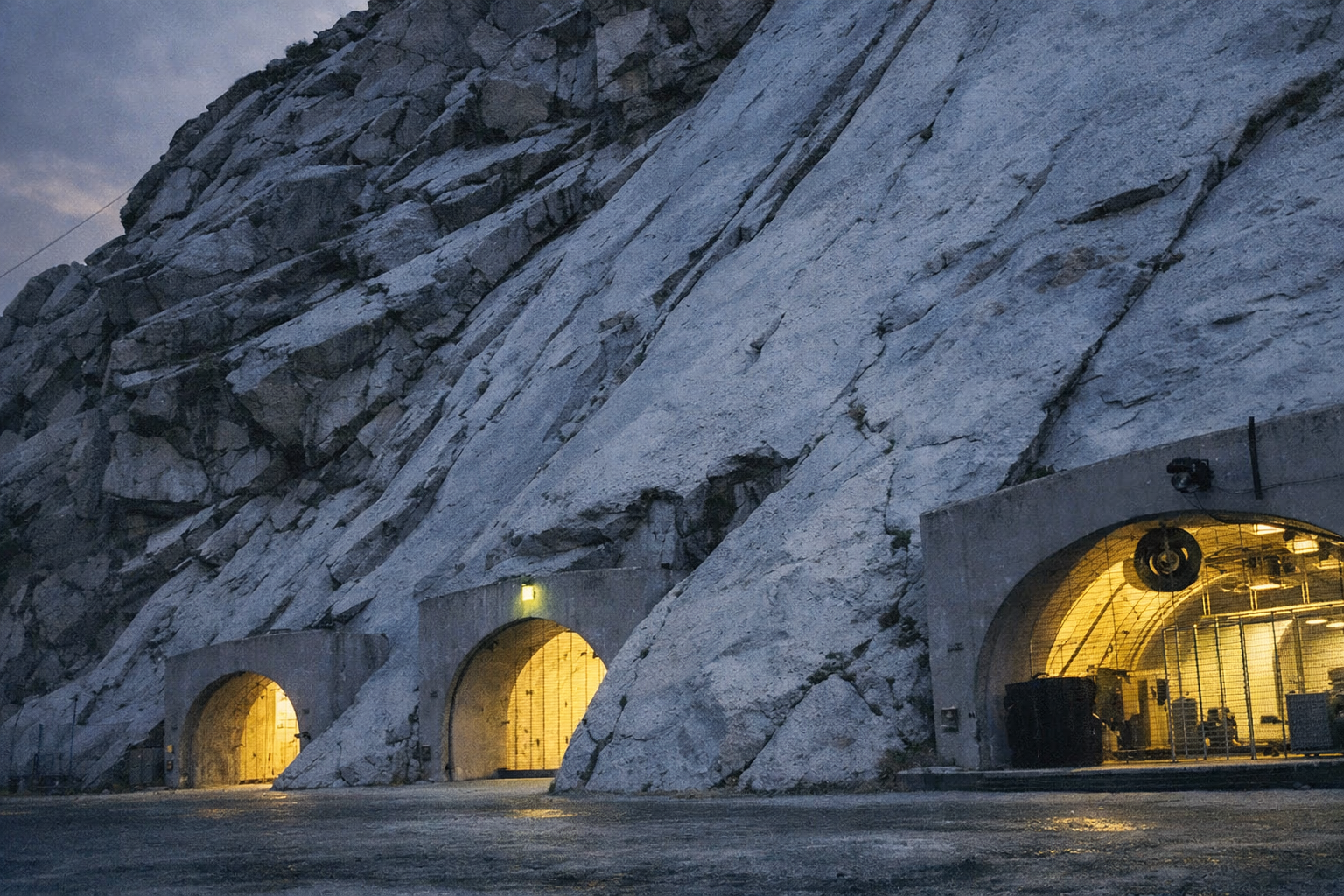
The world is waking up to a terrifying reality: the United States government is no longer content with merely manipulating the price of gold and silver on the COMEX. It is now waging a full-spectrum war to control the physical metal itself. The recent “technical halts” and price smashes on the CME were not isolated incidents of market manipulation; they were the opening salvos in a campaign to seize control of the global gold refining infrastructure.
The target is Switzerland.
And the playbook is the same one being run in Mexico: create instability, leverage economic coercion, and then step in as the “stabilizing” force to secure the strategic assets.
Switzerland is not just a minor player in the gold market; it is the gold market. The Swiss Precious Metals Industry processes roughly one-third of the world’s newly mined gold each year. Of the six largest refineries globally that hold the coveted LBMA “Good Delivery” status—the gold standard for investment-grade bullion—four are based in Switzerland: Valcambi, PAMP, Argor-Heraeus, and Metalor. When an ETF in New York buys gold, when a central bank in Asia stockpiles reserves, when a jeweler in Dubai needs 99.99% pure bars, the metal almost certainly passes through the Ticino region or the cantons of Neuchâtel.
This is not an accident of geography.
As one industry expert put it, Switzerland is to gold what Bordeaux is to wine. The country offers an “exceptional level of security,” efficient logistics, and a reputation for “Swiss made” quality that guarantees acceptance in vaults from London to Shanghai. This concentration of refining power represents the last truly independent node in the Western financial system. And for a Washington that views the world through the lens of “Project Vault” and critical minerals dominance, that independence is an unacceptable risk.
The Tariff Trap: Forcing Switzerland to Surrender the Crown Jewels
The facade of a “trade dispute” fell away in August 2025, when the United States imposed a staggering 39% tariff on imports of Swiss gold bars, specifically targeting the 1-kilogram bars that form the backbone of the COMEX delivery system. At first glance, this seemed like economic madness. Swiss gold exports to the U.S. had reached CHF 53 billion, and the new tax threatened to add $24 billion in costs, disrupting a supply chain that keeps the New York futures market functioning.
But this was never about tariffs. It was about leverage. It was a gun to the head of the Swiss Confederation.
By threatening to choke off the flow of refined gold, the U.S. delivered an ultimatum that was as clear as it was chilling: relocate your refining capacity to American soil, or watch your primary export market collapse. As one geopolitical analyst starkly put it, this is not a trade deal—it is an assault on the only truly sound monetary asset in the Western world, and a demand for Switzerland to abandon its monetary autonomy.
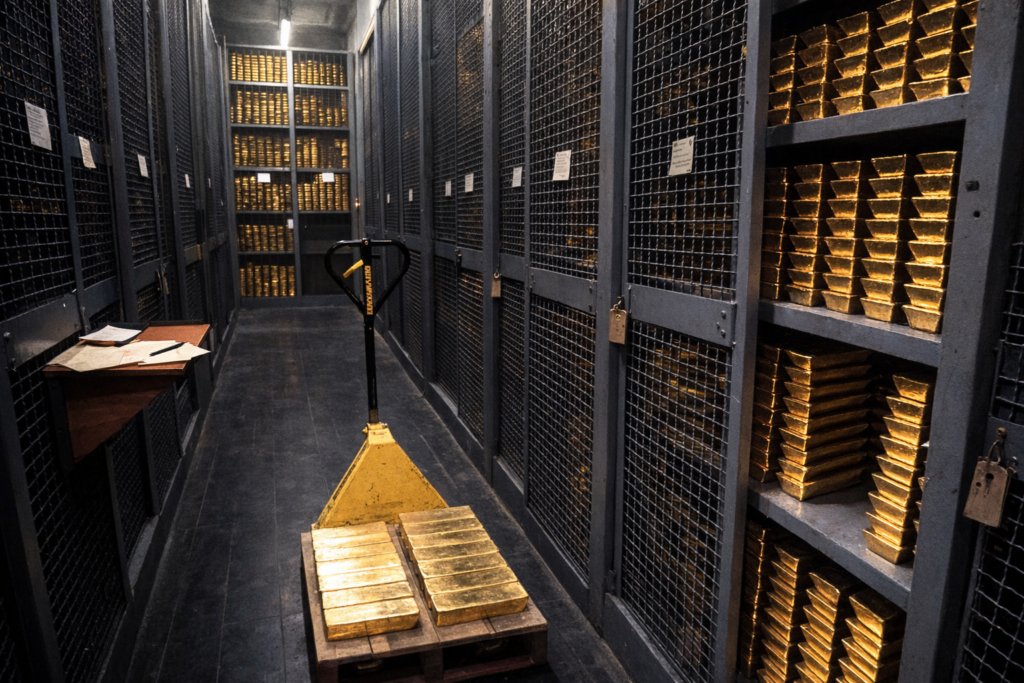
The demand is for Swiss refiners to move their operations, their technology, and their expertise into the U.S. jurisdiction. The logic is brutal. Once the gold is refined on American soil, it falls under the umbrella of U.S. extraterritoriality. It becomes subject to sanctions, to political pressure, and—as history has shown with assets from Venezuela to Afghanistan—to potential confiscation. The goal is to transform a Swiss strategic advantage into administrative dependency. Washington does not want to buy Swiss gold; it wants to own the Swiss gold machine.
This aligns perfectly with the Trump administration’s “Critical Minerals 2.0” strategy. In 2025, the U.S. Geological Survey added silver to the critical minerals list and expanded the roster to 60 items. The administration invoked the Defense Production Act to fast-track mining projects and began directly buying equity stakes in mining companies. “Project Vault” is not just about stockpiling metal; it is about controlling the entire value chain. And the most valuable link in that chain is the refinery.
The Doctrine of Coercion: From Mexico to the Matterhorn
To understand how far the U.S. is willing to go, one only needs to look at the playbook currently running in Mexico. The killing of cartel leader “El Mencho” was framed as a victory against fentanyl, but the timing—coinciding with silver’s addition to the critical minerals list and massive COMEX withdrawals—suggests a deeper strategic motive [citation: transcript]. By decapitating the cartel, the U.S. triggered a wave of retaliatory violence that threatens the world’s largest silver supply.
Now, watch how this instability is being projected toward Switzerland. In late 2024 and 2025, Switzerland itself issued travel advisories warning its citizens about the dangers of cartel violence in Mexico, specifically noting the risk of “terror-style attacks” in popular tourist zones. The Swiss government is acutely aware that Mexican instability is a direct threat to the supply chains feeding its refineries. Mexico is a major source of silver and other base metals that flow into Swiss processing facilities.
Here is the harsh, speculative reality the mainstream media refuses to touch: if the U.S. is willing to destabilize Mexico to control silver supply, what stops that instability from bleeding directly into Switzerland?
The U.S. has already demonstrated a willingness to weaponize its intelligence apparatus to secure resources. As documented by Chinese academic analysis, the U.S. is actively using “peace” and “security” as pretexts to lock down critical minerals in the Democratic Republic of Congo, Ukraine, and Serbia . They are leveraging the “Lobito Corridor” to physically reroute African minerals away from Eastern markets and toward the West. This is not a conspiracy; it is published U.S. policy.
The connection to Switzerland is the migrant and criminal networks that link Latin American cartels to European organized crime. If the violence in Mexico escalates—if the cartels, now designated as Foreign Terrorist Organizations by the U.S., face total war—their financial and logistical networks in Europe will become prime targets. Or, more darkly, they could become vectors of instability.
Imagine a scenario where cartel violence, fueled by U.S. intervention in Mexico, spills over into the Swiss canton of Ticino, where the refineries are located. A targeted assassination of a refinery executive with ties to Latin American supply chains. A firebombing at a logistics depot. A threat against the families of workers. The goal would not be to stop the refining; it would be to create a security crisis that justifies “assistance.”
When the Swiss government cannot guarantee the safety of the world’s gold supply, who do they call? The same security apparatus that created the vacuum. The U.S. military and private military contractors could be positioned as the only force capable of protecting these “strategic assets” from the terrorist threat that Washington itself inflamed. It is the Mexican playbook, exported to the Alps.
This is the nightmare scenario for Swiss sovereignty. The U.S. is demanding that Switzerland hand over its refining capacity voluntarily, through economic blackmail. If Switzerland refuses, the pressure will not stop. The same “technical issues” that plague the COMEX could begin to appear in the Swiss financial system. The same cartel violence that terrorizes Mexico could find its way to the shores of Lake Lugano.
The U.S. Treasury, through the Exchange Stabilization Fund, is already covertly pulling massive amounts of silver out of COMEX, likely to feed its strategic reserve [citation: transcript]. They are building a stockpile to rival Fort Knox. But a stockpile of bars is useless without the industrial capacity to turn doré bars into investment-grade product. The U.S. wants the refineries. And they are willing to burn the global order to get them.
The message to Bern is simple: your gold, your refineries, and your sovereignty are now line items on a Pentagon spreadsheet. The violence in Mexico is a warning. The tariffs are the demand. Compliance is the only option they are leaving on the table.
Leave a Reply