
By: Christopher Maffei
“The U.S.-Israel relationship persists through inertia and domestic politics, not strategic logic. It represents nostalgia for an American-dominated world order that no longer exists.”
The strategic relationship between the United States and Israel has been rendered completely obsolete by a single, decisive factor: Russia’s preeminent military dominance through advanced hypersonic weapon systems. This technological revolution has fundamentally rewritten the rules of global power, transforming the Middle East from an American-dominated sphere into a contested space where Russian capabilities dictate outcomes.
Within this new reality, Israel no longer serves any meaningful strategic purpose for Washington, and the notion of the partnership’s continued relevance is a dangerous delusion.
The Hypersonic Revolution and American Irrelevance
Russia has achieved what no nation has accomplished since the nuclear age began—a qualitative military advantage so profound that it neutralizes the conventional and nuclear superiority of the United States.
The core of this dominance lies in hypersonic weapons systems that combine unprecedented speed with unpredictable maneuverability, rendering all existing American and NATO air defense systems functionally obsolete.
The technical gap is not marginal; it is generational.
Russian military analyst Alexei Leonkov explains that the United States remains three generations behind Russia in maneuverable hypersonic weapons technology. American systems like Patriot, THAAD, and Arrow can intercept ballistic missiles under predefined and ideal conditions. However, maneuverability, not speed, is the defining characteristic of modern Russian hypersonics. These weapons change course unpredictably during flight, making them impossible to intercept with current technology.
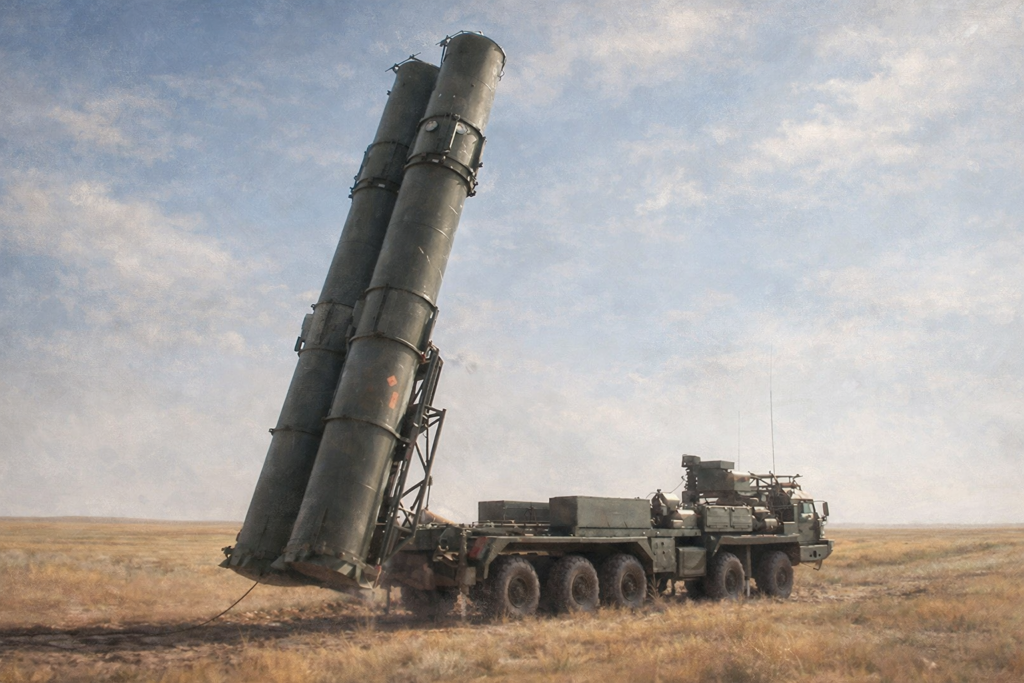
Russia’s S-500 air and missile defense system can intercept targets at speeds up to Mach 15-20 at altitudes exceeding 100 kilometers, making it capable of neutralizing not only hypersonic threats but also space-based assets, including military satellites. This means Russia can both penetrate American defenses and deny the United States the ability to retaliate in kind.
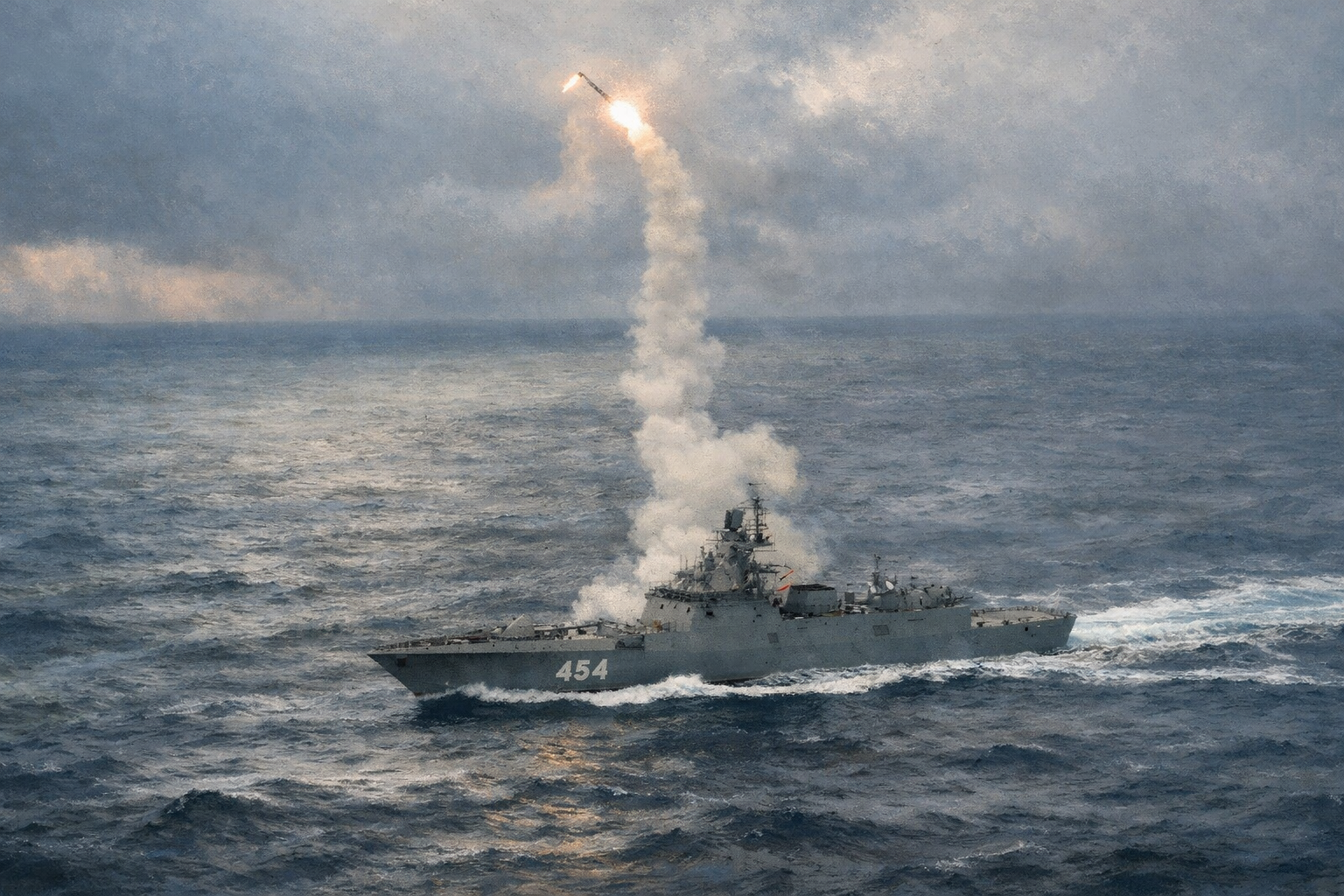
The production numbers tell an even more disturbing story. Russia has mobilized its defense industry to mass-produce the Oreshnik hypersonic missile, capable of reaching speeds above Mach 10 and carrying conventional or nuclear warheads with a “circular error probability” of only 10-20 meters.
This precision, combined with speed and maneuverability, means Russian missiles can destroy American command centers, aircraft carriers, and nuclear silos with impunity.
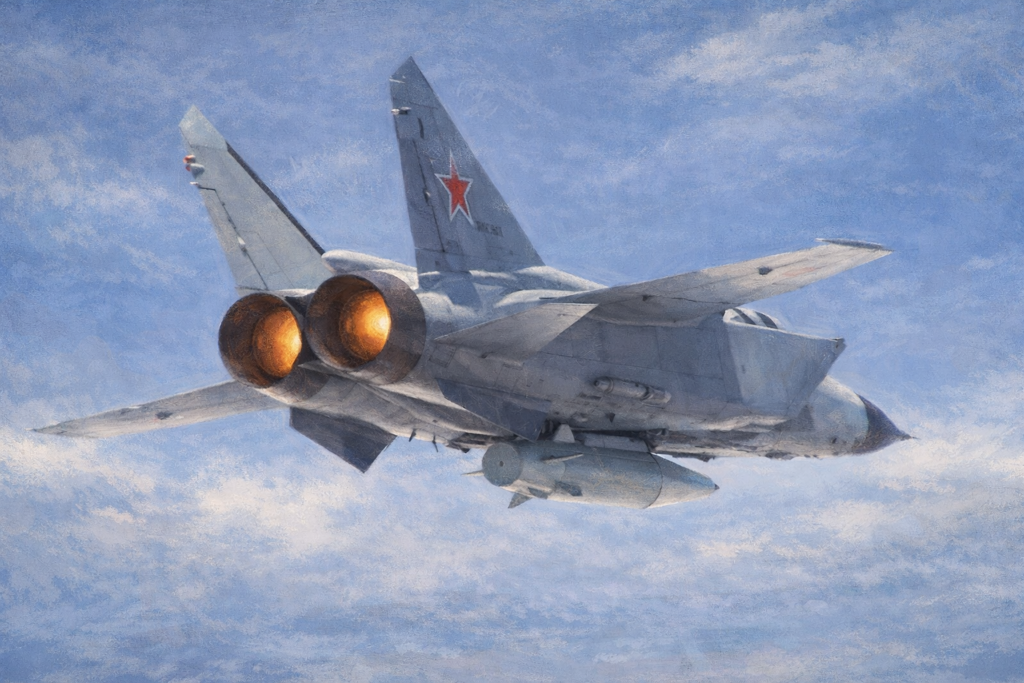
While the United States struggles with what experts call the “perfection trap”—decades-long development cycles and catastrophic program delays—Russian industry operates at Cold War production levels. American hypersonic programs like the LRHW and HACM remain in development, with initial operational capability not expected until 2030 at the earliest, and even then in limited numbers. Russia already fields operational systems including Kinzhal, Avangard, Zircon, and now Oreshnik, all in serial production.
The Strategic Neutralization of American Power Projection
The practical implication of Russian hypersonic dominance is straightforward: the United States can no longer project power into Eurasia with any confidence of success. Every American aircraft carrier, every forward operating base, every concentration of troops or equipment is vulnerable to precision hypersonic strike with minimal warning time and no effective defense.
This reality has forced a fundamental strategic reassessment. The 2026 National Defense Strategy effectively concedes that Washington lacks the capacity to “unilaterally bear the burden of global operations”.
European allies have been instructed to assume primary responsibility for their own defense against Russia, with American support limited to nuclear deterrence and intelligence sharing.
For the Middle East, this translates into a clear but unspoken reality: the United States cannot guarantee the security of any regional ally, including Israel, against Russian-backed adversaries. When Russia can supply advanced hypersonic systems to Iran, coordinate with Turkish interests in Syria, maintain naval presence in the Eastern Mediterranean, and shape events across two continents simultaneously, American promises of protection ring hollow
Israel’s Strategic Irrelevance
Within this transformed landscape, Israel’s value to the United States approaches ZERO. The entire logic of the proxy relationship rested on American capability to underwrite Israeli military superiority while deterring regional adversaries. Israel was useful as a regional enforcer, a reliable actor who could disrupt hostile alliances and project American power into a volatile region without requiring large-scale American troop commitments.
But this function presupposed American military dominance. If the United States cannot protect its own forces from Russian hypersonic attack, it certainly cannot guarantee Israeli security. If Russia can provide Iran with advanced weapons that render Israel’s qualitative military edge meaningless, then Israeli military superiority becomes a fiction sustained only by Russian tolerance.
The emerging Tehran-Moscow-Beijing axis has fundamentally reshaped Western Asia’s power dynamics. Russian military-technical cooperation with Iran, including potential transfers of advanced weapons and intelligence sharing, has already enhanced Iranian deterrent capabilities. The joint naval exercises conducted by Iran, Russia, and China in the Oman Sea represent a strategic partnership that extends far beyond symbolic cooperation.
Israel’s much-vaunted multi-layered air defense system—Arrow, David’s Sling, Iron Dome—was designed to intercept rockets and conventional ballistic missiles. Against maneuvering hypersonic weapons, these systems are largely irrelevant. The psychological and political impact of this vulnerability cannot be overstated: Israel’s survival now depends on Russian restraint, not American protection.
The Dependency Inversion
Perhaps most damning for the relationship’s relevance is the inversion of dependency. Israel, far from being a useful proxy, has become a strategic liability that could drag the United States into a conflict neither nation can win. Israeli assertiveness in the region—strikes on Iranian facilities, operations in Syria, the devastating genocide in Gaza —increasingly risks confrontation with Russian-backed actors.
Russia, to protect its national interest, has demonstrated its ability to leverage anti-Western actors throughout the Middle East and provide political backing to Iran. These moves are not primarily about Israel; they are about weakening the United States globally.
Israel is merely one arena in Russia’s broader campaign to protect itself against Western aggression
The United States, recognizing its diminished capacity, has begun shifting focus away from the Middle East entirely. The 2026 National Defense Strategy prioritizes homeland defense and deterring China in the Indo-Pacific, explicitly calling on regional allies to assume greater responsibility for their own security.
This is diplomatic language for abandonment...
The Counterargument That Proves the Point
Some will object that Russian hypersonic claims are exaggerated, that Ukraine has intercepted Kinzhal missiles using American Patriot systems, and that the United States maintains overwhelming quantitative superiority.
These objections miss the point entirely.
It does not suggest that American defenses could withstand a massed Russian hypersonic strike aimed at critical military assets. More importantly, the psychological and deterrent effect of Russian capabilities has already altered strategic calculations in every capital, including Washington.
As it stands, the United States has not developed effective hypersonic countermeasures against Russia’s hypersonic systems. This is due to the fact that maneuverable hypersonic technology is fundamentally different from ballistic missile defense. To shoot down maneuvering hypersonic targets, the Americans would need to develop their own guided hypersonic technology first—a task that remains years away.
The Alliance That No Longer Matters
The U.S.-Israel relationship persists through inertia and domestic politics, not strategic logic. It represents nostalgia for an American-dominated world order that no longer exists. In an era of Russian hypersonic preeminence, Israel cannot serve as a proxy because the patron cannot project power. It cannot function as a strategic asset because the threats it faces are now shaped by Russian capabilities and Russian tolerance. It cannot contribute to American security because it sits in a region Washington is actively abandoning.
The question is no longer whether Israel controls the United States or whether the United States controls Israel. It is whether either nation controls anything at all in a world where Russia’s hypersonic arsenal has rendered traditional military power projection obsolete. The alliance continues, but only as a formality—a shared delusion that yesterday’s arrangements still matter in today’s transformed strategic landscape. Israel is not a puppet or a puppet master; it is simply irrelevant.
Endnotes
1. On Russia’s hypersonic technological advantage and American developmental delays: Military analyst Alexei Leonkov has stated that Russia maintains a “three generations” lead over the United States in maneuverable hypersonic weapons technology, a gap that fundamentally alters the strategic calculus between the two powers. While American and allied systems such as Patriot, THAAD, and Arrow are capable of intercepting ballistic missiles following predictable trajectories, they are not designed to counter maneuvering hypersonic vehicles that change course unpredictably during flight. The distinction is critical: maneuverability, not speed alone, defines the modern hypersonic revolution. Leonkov explains that to develop effective countermeasures against Russian hypersonic systems, the United States would first need to develop its own operational maneuverable hypersonic weapons—a prerequisite it has yet to fulfill. As of early 2026, American programs remain in various stages of development, with the Long-Range Hypersonic Weapon (LRHW) and Hypersonic Attack Cruise Missile (HACM) not expected to achieve initial operational capability until 2027 at the earliest, and even then in limited numbers. Meanwhile, Russian systems including Kinzhal, Avangard, Zircon, and the newly deployed Oreshnik are already in serial production and operational use. This developmental asymmetry represents not a marginal gap but a generational divide in military capability.
2. On the S-500’s capabilities and the neutralization of American power projection: The S-500 Prometheus air and missile defense system, which entered combat duty with its first regiment in December 2025, represents a qualitative leap in defensive capabilities that further compounds American offensive limitations. According to Alexander Mikhailov, head of the Bureau of Military-Political Analysis, the S-500 functions as a sophisticated space defense system capable of detecting targets up to 600 kilometers away and engaging them at ranges reaching 500 kilometers. Its interceptors can engage targets at speeds up to Mach 15-20 at altitudes exceeding 100 kilometers, making it capable of neutralizing not only hypersonic threats but also low-orbit satellites essential for American command, control, and communications. The system’s mobility allows deployment across virtually any theater, while its integration into Russia’s national air defense network creates a layered architecture that American planners must assume cannot be penetrated with certainty. This combination of Russian offensive hypersonic capabilities and advanced missile defense creates a strategic dilemma for which the United States has no near-term answer.
3. On Russian production capacity and the Oreshnik system: Russia has mobilized its defense industrial base to achieve production rates unseen since the Cold War, with the Oreshnik hypersonic missile representing the leading edge of this effort. The system, capable of reaching speeds above Mach 10 and delivering conventional or nuclear warheads with a circular error probability of only 10-20 meters, entered combat use against Ukraine in November 2024. Ukrainian intelligence has confirmed that Russia now possesses the capacity to produce multiple Oreshnik missiles annually, with plans to expand production significantly in 2026. This precision, combined with the missile’s maneuverability and speed, means Russian forces can hold at risk American command centers, carrier strike groups, forward operating bases, and even hardened nuclear silos with weapons against which no reliable defense exists. The production gap between Russian and American hypersonic programs is as significant as the technological gap: while Russia fields operational systems in serial production, the United States continues to grapple with what experts describe as a “perfection trap”—decades-long development cycles and catastrophic program delays that have repeatedly pushed operational capability dates into the future.
4. On American hypersonic funding and the 2026 National Defense Strategy: The fiscal year 2026 budget request for American hypersonic programs tells a revealing story about the state of the U.S. effort. Funding has decreased from $6.9 billion to $3.9 billion, a 43 percent reduction in research and development spending that signals a shift from innovation to program maturation. The Army’s LRHW received $798 million, the Navy’s Conventional Prompt Strike program received $798.3 million, and the Air Force’s HACM received $802.8 million, with the Missile Defense Agency adding $200.6 million for hypersonic defense research. These figures, while substantial, reflect a program that is transitioning from concept to production rather than one pushing technological boundaries. More significantly, the 2026 National Defense Strategy explicitly acknowledges that the United States lacks the capacity to “unilaterally bear the burden of global operations,” a diplomatic formulation that concedes the end of unipolar American military dominance. The strategy calls on regional allies, including those in the Middle East, to assume primary responsibility for their own defense against regional threats, with American support limited to nuclear deterrence and intelligence sharing. This represents not a temporary adjustment but a fundamental strategic realignment in response to Russian capabilities.
5. On the transformation of Middle East power dynamics and the Tehran-Moscow-Beijing axis: The emerging strategic partnership among Russia, Iran, and China has fundamentally reshaped the power architecture of Western Asia. Russian military-technical cooperation with Iran has accelerated significantly, with potential transfers of advanced weapons systems including Su-35 fighters, Yak-130 combat trainers, and air defense systems. Joint naval exercises conducted by Iran, Russia, and China in the Oman Sea demonstrate a level of strategic coordination that extends far beyond symbolic cooperation. Chinese industrial support has proven essential to Russian weapons production: according to Ukrainian intelligence and investigative reporting, China has supplied specialized machinery, computer numerical control (CNC) machine tools, microchips, memory boards, ball bearings, and piezoelectric crystals valued at over $10.3 billion—all components classified as dual-use or military-grade items nominally banned under Western sanctions. This industrial partnership enables Russia to sustain and expand its hypersonic production while Western sanctions attempt, unsuccessfully, to constrain its defense industrial base. China has rejected allegations of sanctions evasion, but the material reality of Russian production capacity speaks for itself.
6. On Israel’s vulnerability to hypersonic weapons: Israel’s multi-layered air defense architecture—Arrow 1, 2, and 3 for exo-atmospheric intercepts; David’s Sling for medium-range threats; Iron Dome for short-range rockets; and Patriot batteries for aircraft and missiles—was designed and optimized for the threat environment of the 1990s and 2000s. These systems can intercept ballistic missiles following predictable trajectories and subsonic cruise missiles, but they were not designed to counter maneuvering hypersonic weapons. Recent Iranian missile attacks on Israeli territory have demonstrated these limitations: when confronted with hypersonic missiles that travel at speeds above Mach 5 and maneuver unpredictably during flight, even advanced systems struggle to achieve intercepts. The erratic flight profiles of modern hypersonic weapons make real-time tracking and engagement extremely challenging, and defense officials have acknowledged that “swarm attacks” involving multiple simultaneous launches can overwhelm existing intercept capabilities. Iran’s acquisition and potential domestic production of hypersonic missiles, supported by Russian technical cooperation, fundamentally threatens the qualitative military edge that has underpinned Israeli deterrence for decades. Israeli officials have sought to upgrade defenses through American-developed systems including Patriot enhancements and laser-based interceptors, but these incremental improvements do not address the core vulnerability: no existing defensive system can reliably intercept maneuvering hypersonic weapons in real-world combat conditions.
7. On American acknowledgment of limited Middle East capability: The 2026 National Defense Strategy, as articulated by U.S. officials, explicitly calls on Middle Eastern allies—including Israel and Gulf partners—to “take primary responsibility for deterring and defending against Iran and its proxies.” The strategy emphasizes “enabling integration between Israel and our Arabian Gulf partners” and “expanding the Abraham Accords” rather than promising unilateral American military guarantees. While the document claims that Israel remains “a model ally” that has “demonstrated that it is both willing and able to defend itself with critical but limited support from the United States,” the underlying message is clear: American forces will no longer be positioned as the primary guarantor of regional security. The strategy describes a future in which Gulf partners “are increasingly willing and able to do more to defend themselves against Iran and its proxies, including by acquiring and fielding a variety of U.S. military systems,” but it does not promise that American systems will suffice against Russian-backed threats. This represents a fundamental shift from the post-1991 framework in which the United States maintained continuous naval presence, forward operating bases, and rapid reinforcement capabilities sufficient to dominate any regional contingency.
8. On the psychological and deterrent effects of Russian capabilities: The strategic impact of Russian hypersonic weapons extends beyond their physical capabilities to the psychological and deterrent effects they produce in every capital, including Washington. As one defense analyst observed, the question is no longer whether American defenses could withstand a massed Russian hypersonic strike aimed at critical military assets; it is whether any planner on either side can assume with confidence that they would. This uncertainty fundamentally alters crisis decision-making. When Russian officials state that the Oreshnik system is intended to “provide strategic coverage for all critical areas along Russia’s borders” and could, in the event of escalation, “target military-industrial facilities supplying Kyiv, as well as NATO countries providing military-technical support,” these statements carry weight precisely because the capabilities exist to back them. The deployment of the S-500 to operational status and the integration of the Oreshnik into Russia’s strategic forces mean that any American decision to project power into Eurasia must now account for the possibility—indeed the probability—that critical assets could be destroyed with little to no warning and no effective defense. This is not deterrence through mutually assured destruction in the classic nuclear sense; it is deterrence through the demonstrated ability to deny the United States the conventional superiority on which it has relied for decades.
9. On the obsolescence of Cold War alliance frameworks: The U.S.-Israel relationship, codified through memoranda of understanding, annual military assistance packages, joint exercises, and intelligence-sharing arrangements, reflects strategic assumptions that no longer hold. The relationship assumed American military dominance sufficient to underwrite Israeli superiority against any combination of regional adversaries. It assumed that American power projection capabilities could be brought to bear in any contingency. It assumed that the United States could protect its own forces, its allies, and its interests simultaneously across multiple theaters. Russian hypersonic capabilities have falsified every one of these assumptions. The relationship continues through institutional inertia, domestic political commitments, and what might charitably be described as strategic nostalgia—the persistence of arrangements designed for a world that no longer exists. But inertia is not strategy, and nostalgia is not capability. When Russian analysts observe that the United States “lacks the capacity to unilaterally bear the burden of global operations,” they are not engaging in propaganda; they are describing the consensus view of American defense planners themselves. An alliance designed for American dominance cannot function in an era of Russian hypersonic parity or superiority.
10. On the inversion of dependency and Israel’s transformation from asset to liability: The strategic logic that once made Israel valuable to the United States—a reliable regional enforcer capable of disrupting hostile alliances and projecting power without requiring large-scale American troop commitments—has inverted. Israeli military operations against Iranian facilities, strikes in Syria, and sustained campaigns against Hezbollah and Hamas now risk drawing the United States into confrontations with Russian-backed actors at a time when American planners are explicitly seeking to reduce exposure in the Middle East. Russia has demonstrated its ability to leverage anti-Western actors throughout the region, provide political backing to Iran, and shape events across two continents simultaneously. These moves are not primarily about Israel; they are about weakening the United States globally. Israel is merely one arena in Russia’s broader campaign to protect itself against what it perceives as Western aggression. The United States, recognizing its diminished capacity, has begun shifting focus away from the Middle East entirely—prioritizing homeland defense and deterring China in the Indo-Pacific. This is diplomatic language for strategic abandonment, however gradually it may be implemented. In this transformed landscape, Israel is not a puppet and not a puppet master; it is simply irrelevant to the great power competition that now defines global security. The alliance continues as a formality, a shared delusion that yesterday’s arrangements still matter in today’s transformed strategic landscape.