
The precarious relationship between sovereign debt, military expansion, and existential national crisis finds stark expression in two historical epochs: Nazi Germany’s rearmament in the 1930s and the contemporary United States’ fiscal-military posture. By examining Germany’s use of MEFO bills to secretly finance rearmament and the subsequent drive to war for economic survival, and contrasting it with the U.S. reliance on debt to fund global power projection—often linked to securing resources like oil—we can illuminate a disturbing cyclical logic where debt begets military action, which in turn becomes the only perceived solution to the debt itself. This analysis argues that while the mechanisms differ, both cases reveal a perilous symbiosis between financial unsustainability and militarism, where the state’s survival becomes tied to its ability to wield force, creating a trap that ultimately demands violent expansion or risks catastrophic collapse.
Following Hitler’s rise to power in 1933, the Nazi regime faced a dire paradox: it was ideologically committed to massive, rapid rearmament, but fiscally constrained by a weak economy, limited gold reserves, and a desire to avoid the hyperinflation trauma of the early 1920s. The ingenious, yet deceitful, solution was the creation of Mefo-Wechsel (MEFO bills) in 1934, orchestrated by Hjalmar Schacht.
MEFO bills were promissory notes issued by a fictitious company, the Metallurgische Forschungsgesellschaft (MEFO). Armament contractors were paid with these bills, which the Reichsbank and commercial banks agreed to discount at any time, effectively converting them into cash. The bills had a five-year term, delaying state repayment, and were kept off the official public budget. This created a massive, hidden shadow debt that funded the blistering pace of rearmament. By 1938, MEFO bills accounted for roughly half of all government-issued debt, a ticking time bomb set to mature starting in 1939.
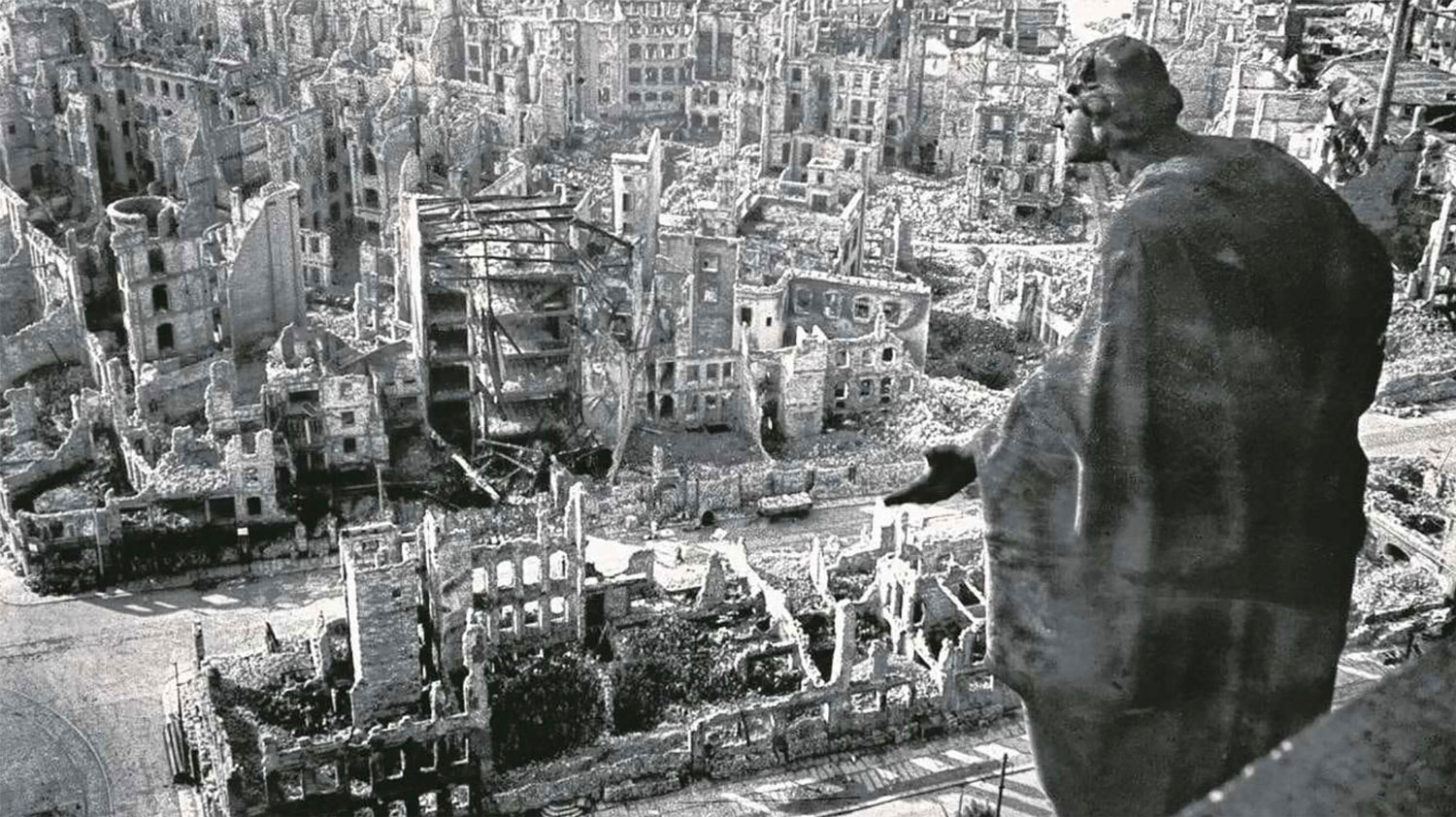
This engineered debt crisis created an inescapable logic for war. The German economy by 1938-39 was a “guns-not-butter” machine, wholly oriented toward military production, with living standards artificially suppressed. The state could not tax its people further, nor could it reveal the true scale of its debt without causing a collapse in confidence. The only way to forestall the imminent collapse when the MEFO bills came due—and to secure the raw materials (especially oil, iron, and food) the resource-poor Reich desperately needed—was plunder. War became the prescribed economic policy. Conquest would provide the loot to pay creditors, seize industries, and enslave populations to fuel the war economy, in a pyramid scheme that required constant expansion. Historians like Adam Tooze argue that the timing of the invasion of Poland was fundamentally influenced by this financial crunch. Germany did not go to war despite its debt; it went to war because of it. War was the only exit strategy from a self-created financial trap.
The United States’ situation is structurally different but functionally analogous in its dependence on a feedback loop between debt and military power. The U.S. did not create hidden debt for initial rearmament; instead, it built a global system after World War II where its currency became the world’s reserve currency, underpinned by the Petrodollar system established in the 1970s. In this arrangement, oil is priced and traded in U.S. dollars, creating perpetual global demand for dollars, which allows the U.S. to finance enormous trade and budget deficits by issuing debt (Treasury bonds) that the world readily absorbs.
Here, the link to military power is direct and circular. The credibility of the dollar rests not just on the U.S. economy, but on perceived geopolitical stability and security guarantees. The U.S. projects military power globally—maintaining carrier groups, bases, and alliances—which, among other objectives, secures the sea lanes and regions critical for global oil production and transport (e.g., the Persian Gulf). This security umbrella helps maintain the petrodollar system. In turn, the ability to run vast deficits, funded by global demand for dollars, pays for that very military apparatus. The Department of Defense budget, now exceeding $800 billion annually, is financed significantly through debt issuance.
The connection to oil-securing wars is evident in post-Cold War policy. While not the sole factor, the 1991 Gulf War, 2003 Iraq War, and enduring focus on the Middle East can be framed as actions to prevent any hostile power from destabilizing the oil-rich region and, crucially, challenging dollar-denominated oil trading. A shift to euros or other currencies for oil would shatter a pillar of dollar demand, forcing the U.S. to dramatically curtail its deficit spending. Thus, military action to secure the geopolitical framework of oil is, in essence, action to secure the financial mechanism that funds American global power.
The core parallel between 1939 Germany and the modern U.S. is the dependency on an unsustainable system that requires dominance to survive. Germany’s MEFO system was a closed, domestic fraud that demanded territorial conquest for resource extraction and debt liquidation. America’s system is an open, global arrangement that demands military hegemony to maintain the financial privileges of the dollar.
Both systems face a similar existential threat: the withdrawal of confidence. For Germany, the threat was the bill holders (banks, industrialists) presenting the MEFO notes for redemption, exposing the emptiness of state coffers. For America, the threat is major foreign creditors (like China, Japan, or oil-producing states) diversifying away from dollar-denominated assets, or adversarial powers creating alternative financial and energy-trading architectures. This would drive up U.S. borrowing costs, forcing austerity, drastic cuts to the military budget, or dramatic tax increases—any of which would imperil the economic foundation of its power.
The critical divergence is timeframe and scope. The MEFO trap unfolded over five years and led to a conventional, hot war for direct plunder. The American debt-military trap has unfolded over decades and is sustained by a financialized form of plunder—the seigniorage and “exorbitant privilege” of the dollar, which extracts value from the global economy through inflation and debt issuance. The “war” is constant, low-intensity, and economic-financial (sanctions, currency competition), punctuated by conventional conflicts to reset the board in its favor.
Germany’s story ended in catastrophic military defeat and the utter repudiation of its debt. The U.S., thus far, has avoided this fate because its system is globalized and consensual (if coercive). However, the lesson is clear: when a state’s financial viability becomes inextricably linked to its ability to project military force to sustain that very financial model, it enters a dangerous, self-justifying cycle. The debt fuels the military, and the military protects the system that allows the debt. The end of this cycle comes only when the costs of military projection exceed the economic benefits of financial privilege, or when external challengers successfully dismantle the pillars of that privilege.
For the United States, avoiding a German-style collapse does not require territorial conquest, but it does require navigating a perilous transition. It must either reform its fiscal structure to reduce dependency on perpetual deficit spending funded by global dollar demand—a painful internal adjustment—or risk finding that, like the Reich, its debts can ultimately only be “paid” in a currency of chaos and conflict, as the struggle to maintain the system that postpones the reckoning becomes itself the source of global instability. The MEFO bills were a secret, short-term fix with a five-year fuse. The American debt, woven into the fabric of global power, is a public, long-term gamble with the world’s entire financial system as its stake.